


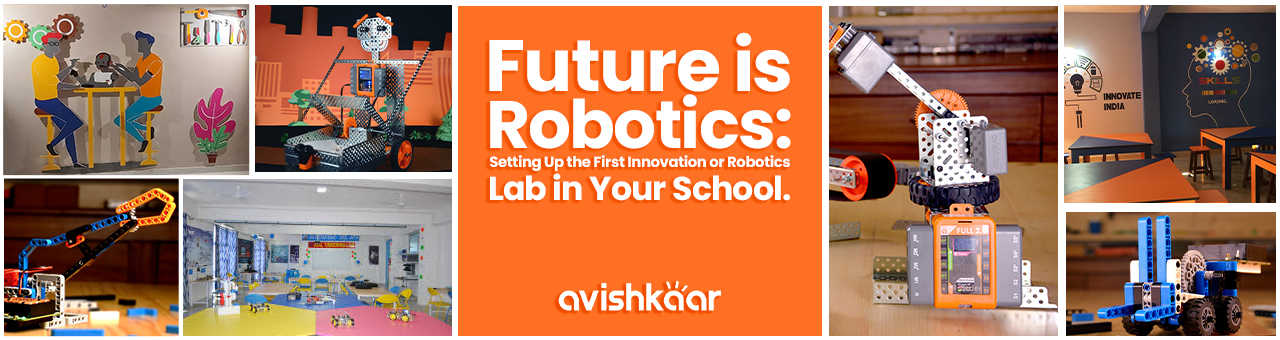
We’re all aware of the benefits and importance of familiarising students with advanced technology like AI and robotics from a young age. With tools like ChatGPT and Gemini, everyone has a touch of Hogwarts magic at their fingertips.
While AI may not be able to make objects float with a simple ‘LeviOsa’ (yet), it’s set to create jobs that don’t even exist in this day and age. The World Economic Forum predicts that a whopping 65% of students from classes I to VIII will be working those jobs. We cannot wait for our kids to acquire the right skills when they graduate from school; now is the time to prepare them.
We understand that the idea of setting up a robotics lab feels overwhelming, so we’ve prepared a step-by-step guide to help you with it.
Step 1: Define Your Objective
As an educator, if you have decided to introduce robotics training in your school, there must be a good reason! Define your why and communicate your idea with your school’s teachers, administrators and other stakeholders.
You can try thinking along the following lines:
- Will the robotics lab serve as a foundation for advanced STEM learning among primary school students? OR
- Will it help senior students build employable technical and problem-solving abilities?
- Will the lab be integrated into lessons to better explain theoretical concepts in Maths and Science, or will it function as a separate module/club?
- How should the lab nurture innovation— by encouraging participation in competitions like IRC League, Avishkaar Game League or Avishkaar Makeathon, or by allowing students to work on long-term patent-worthy projects?
Step 2: Secure Budget and Funding
Before setting up a robotics lab, it’s important to allocate a realistic budget that covers infrastructure, equipment and maintenance. It can start with reviewing existing budget allocations, reallocating underutilised resources, reaching out to programmes like AIM for grants, or tapping into alumni or parental networks for funding. Budgeting is unarguably the most tedious step, but it’s also the most important one to guarantee students a well-functioning lab that allows them to tinker. Our most basic labs start at 1.5-2 lakh rupees, and more advanced setups can cost up to 6 lakh rupees (cost for the year 2025).
The best way to utilise the budget is to build the lab in phases.
Phase 1 (Foundation): The main focus in this phase should be the infrastructure. Think a simple but playful room with vibrant colours so that students feel invited rather than intimidated. A good network connection/wi-fi router, wiring, stools, tables, storage units, safety gear, and other basic equipment like introductory robotics kits should also be procured.
Phase 2 (Expansion): During this phase, schools can set up computers to teach students the basics of coding and game design. Purchasing robotics kits for different age groups in this phase can also ensure that the robotics training aligns with each student’s skill level and developmental stage. Students in advanced grades would also be adequately challenged. This is also the time when teachers should attend basic coding workshops or training sessions so that they can assist students through slightly more complex issues. Avishkaar conducts intriguing teacher training sessions based on topics like Python, Game Design, AI and robotics every quarter. Regular training sessions are also provided for partner schools to guide them in the initial stages.
Phase 3 (Consolidation): In the final phase, labs should evolve into innovation hubs. Schools can expand their collection by adding a wider variety of robotics kits, giving students greater flexibility to explore and build beyond just a few basic models. Advanced equipment like 3D printers could also be added. Schools should also look into working with professionals who can advance the learning process and outcomes.
Once funding is secured, choosing the right technology partner becomes the next crucial step. At Avishkaar, we work closely with schools to understand their educational goals so that we can help design curricula and set up well-planned labs that align with their vision.
Step 3: Space
To put your plan into action, you should choose the right space. A robotics lab should be spacious enough to accommodate all your students’ big ideas…and work stations…and testing areas…and storage units…and AC units, you get the gist.
Step 4: Procurement of Equipment
Good robotics kits and equipment define the success of an innovation lab. Conduct thorough research, connect with potential partners, and look for kits that suit your defined goals and budget. Choose kits that match your youngest learners up to senior students, ensuring continuity and scalability. Equipment can be a one-time investment if it is durable and can support evolving projects as well as learning for multiple batches.
Schools like Venkateshwara Global School are among 6,000+ institutions that trust Avishkaar to provide high-quality kits. Our range of products is designed to integrate seamlessly into the school curriculum across all grades — from Tweak for Grades I–II and Avishkaar MEX Robotics PRO Kit for Grades III–IV, to the Avishkaar ER Series for Grades V–VIII and the IoT Starter Kit for Grades IX–XII.
Step 5: Integration into Curriculum
After finally establishing the lab, the next challenge is to get your students excited about a new way of thinking. You can do this by including a ‘Robotics Lab’ or a ‘Tinkering’ period in the school timetable for at least one hour/week. A brilliant way to incentivise students is to not assign homework or exams for the lab period. This way, they would actually enjoy and take an interest in the subject material rather than worrying about having to maintain a certain academic score. Alternatively, teachers can use robotics and AI kits to better explain concepts taught in class, like using motion sensors to teach Physics or coding to teach Maths.
For more in-depth learning, schools can have a teacher-led robotics club, so that interested students can invest more time outside school hours.
Schools can also adopt Project-Based Learning (PBL) models in which students can develop prototypes that address real-world issues. We support the PBL model with competitions like the IRC League. With themes like ‘Code Of Duty’, which encourage students to build models that can be used to assist the Indian Armed Forces, we help children innovate to tackle pressing challenges.
Avishkaar helps design lesson plans, assessment rubrics and provides project ideas to partner schools. View our Curriculum Brochure to learn more: Brochure
Step 6: Precaution is Better Than Care
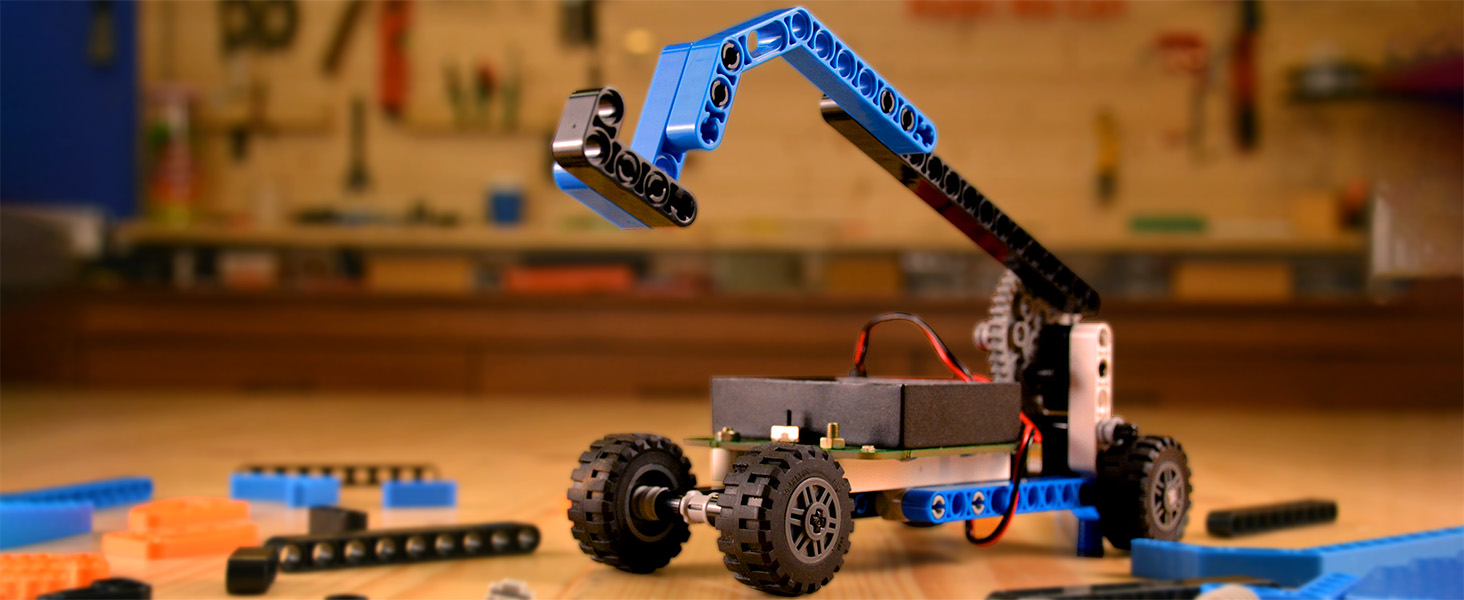
Equipment like wires can be tricky to handle, especially with enthusiastic young learners involved. So, the first few lessons should incorporate first-aid training and instructions on safety measures. Pin up a circular with safety instructions so students don’t forget, and you’re good to go!
Step 7: Stay Connected
To ensure that your innovation lab thrives long after its establishment, staying connected with the community you will build along with your lab is non-negotiable. Connectivity with the community will ensure that your school’s robotics programme aligns with changing educational and job standards as well as emerging industry trends. It can help teachers keep up with new teaching methodologies, software updates, and integration strategies. You can receive updates about competitions, exhibitions and challenges your students can take part in to showcase their projects. You can also use your network to invite guests who are changing the world with their innovations to inspire students.
In case of any technical or pedagogical challenges, staying connected with your lab partner ensures quick resolution. Avishkaar’s dedicated technical support team is always available at your disposal —so that learning never stops.
You’ve got the roadmap — now it’s time to make some real magic.


